
POTS & Dysautonomia Care in Shoreview
 Your tests came back normal. Your body is telling you otherwise. We measure what your nervous system is actually doing, then build care around your story and your goals.
Referring a patient? Jump to the provider referral section ↓
If you’re here, you’ve probably heard some of this
- “Drink more water and add salt.”
- “Your labs look normal.”
- “It’s probably anxiety.”
- “She’ll grow out of it.”
Meanwhile, standing up makes your heart race. You’re exhausted after a full night’s sleep. Brain fog makes school or work feel impossible. Your gut, your temperature and your mood all feel out of your control.
Watch: What’s really happening with POTS
Dr. Tony Ebel D.C., head of PXDOCS.com and the experience miracles podcast explains where POTS and dysautonomia come from, why they look so different from person to person, and why every case at TCWC starts with scans.
POTS is a nervous system problem
POTS (Postural Orthostatic Tachycardia Syndrome) is a form of dysautonomia: a dysfunction of the autonomic nervous system. That’s the part of your nervous system that runs everything you don’t think about: heart rate, blood pressure, digestion, temperature, sleep.
Think of it as two pedals.
- The gas pedal (sympathetic): fight-or-flight. Raises heart rate, pulls energy away from digestion and repair. Built for short bursts.
- The brake pedal (parasympathetic): rest, digest, heal. Runs largely through the vagus nerve. Meant to be your default.
In dysautonomia, the gas pedal gets stuck on and the brake stops working well. The body can’t adjust when you stand, eat, sleep or face stress. That’s why POTS rarely shows up alone. It often travels with fatigue, gut issues, anxiety, headaches and poor sleep.
Why it looks different in every person
POTS rarely has one cause. We call it a Perfect Storm: layers of stress that build until the nervous system can no longer compensate. Common layers include:
- A viral illness (mono, flu, COVID-19)
- A concussion, injury or difficult birth history
- Hypermobility or connective tissue differences
- Long seasons of physical or emotional stress
- Family history of autonomic problems
A 15-year-old whose symptoms started after mono and a 35-year-old whose started after a second pregnancy can carry the same diagnosis with completely different storms behind it. That’s why we don’t use a single protocol.
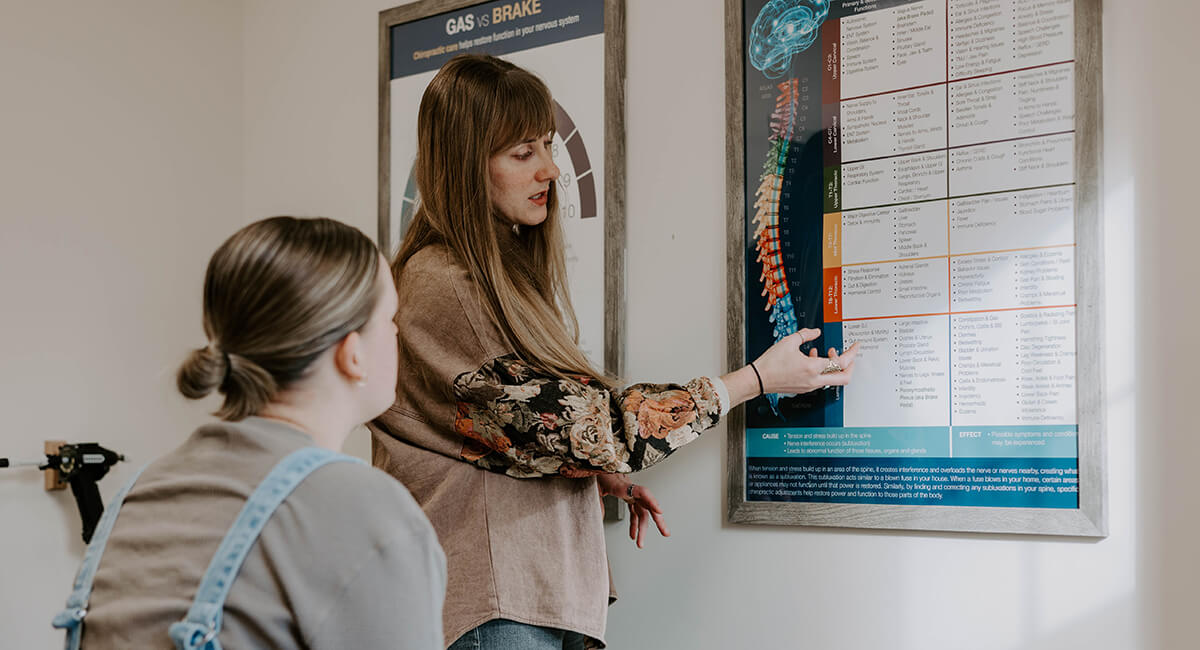
Why we scan before we adjust
POTS doesn’t show up on standard blood work or imaging. Our INSiGHT scans measure nervous system function directly, so we can see what’s happening instead of guessing.
Why the first scans can look “normal”
This surprises many families. In long-standing POTS, first scans often don’t look dramatic. The whole system has adapted to running in survival mode and has partly shut down, so there’s little signal to measure.
So the first phase of care focuses on waking the system back up. As it re-engages, scans become more active before they become more balanced. That pattern is expected, and it’s exactly why we track your scans over time rather than judging one snapshot.
Your path through care
- Scans. HRV, thermal and sEMG. Quick, non-invasive and safe for all ages.
- Your story. A detailed history and consultation. Every case has a different origin, and your history shapes how we apply care. We listen before we recommend.
- Your plan. Our doctor team meets to determine your Phase 1 care plan and visit frequency, based on your scans, your history and your goals.
- Phase 1 care. Gentle, specific neurologically-focused adjustments. POTS cases are typically more intensive: initial recommendations range from 3 visits a week to twice a day for more severe cases.
- Re-scan every 12 visits. Objective progress exams show how your nervous system is changing, and we adjust the plan with you.
What makes the biggest difference
Honestly? Commitment to the plan. The patients who see the most change are the ones who go all in on the recommended frequency, especially in Phase 1 + 2.
Michelle’s story
“My spark is finally coming back”
We work alongside your care team
We don’t diagnose or treat POTS medically. We collaborate with cardiologists, neurologists, pediatricians and other dysautonomia providers, and we share scan reports with your team on request. We find that the best care is collaborative.
For providers referring a patient
Transform Chiropractic Wellness Center offers neurologically-focused chiropractic care as a complement to medical management of POTS and dysautonomia.
- Objective neuro- assessment with INSiGHT HRV, thermal and sEMG scans
- Care plans built by a four-doctor team, with re-assessment every 12 visits to allow optimal time for neuroplastic change and adaptation
- Scan summaries and progress updates in video form sent to you with patient consent
- New patients typically seen within 1-2 days
Questions families ask us
Do I need a POTS diagnosis to come in?
Are the adjustments safe for teens and for someone who faints easily?
Why is the visit frequency so high at the start?
How long until I notice a difference?
I’m not in Shoreview. Is the drive worth it?
Find out what your nervous system is doing and leave hopeful healing is possible
You’ve been told what POTS isn’t. Let’s measure what it is. Your first visit includes a full consultation and INSiGHT scans.
Book a Nervous System Consultation
Or call (651) 252-1912 · 470 Hwy 96 W, Suite 130, Shoreview, MN 55126